Wednesday, April 12, 2023

Groundbreaking News!...

 
... from twenty years ago. Twenty years ago Gary MacDonald, Chair Library Trustees and Margaret Marschner ceremoniously broke ground on the expansion of the Conway Public Library. 

The event was free and open to the public. It was announced through the newspaper ...


... and mailed invitations. 


The year is enshrined in stone on the library addition. 


The libray staff and trustees had worked for several years to fundraise and get all of the approvals for the project which culminated on June 5, 2004 with a grand opening celebration. 


As part of our twentieth commemoration of that glorious undertaking we will be presenting a series of blogs, public events, and displays. 

As you enter the main doors of the library please take a moment to view an exhibit on a small number of items from the large collection we have documenting the expansion. 


Please help us remember and work together towards the future of your library!

Monday, February 27, 2023

The Farm's First Harvest

ICE!


Historically, ice was harvested in this area from frozen ponds and lakes using a specific set of tools. 


Thanks to a generous loan from the Freedom New Hampshire Historical Society the Conway Public Library's Henney History Room has been able to present a new program on ice harvesting which we offer free to local schools and community groups.

It starts with laying tools out on tables or the floor in no particular order...


... and inviting the students to then try to figure out the order in which they would have been used, which of course they can not do.

Then we watch the opening scene of the Disney film Frozen and they try again...


...and they are able to figure it out. 


We confirm and expand their understanding of the tools and the ice harvesting process by examining period photos and archival materials from the Henney History Room collection. 


Now they are able to put a name to the tools... such as this ice hook. 


Then the students closely examine the tools and with a little prompting and a few hints they discover that the tools “talk” and through study of details such as shape and wear marks the tools “tell” you how they are meant to be used - in this case, which part was used to push, and which to pull the ice blocks down the channel. 


Then it is back to the "Frozen" film clip to confirm the way that tool was used. 
It is amazing how well the students do with tools they have never touched before

Another student "listens" to the ice tongs and shows how they were used to pull the blocks up out of the water. 


We talk about how the ice harvesting tools fit into the categories of "simple machines" as defined by the ancient Greeks and use terms such as the screw, lever, and fulcrum. 

The film clip also allows for a discussion of the choreographed "ballet" of ice harvesting such as the role of singing while you work, how teams are set up and work together, and the hierarchy within and between the teams. 


We watch the young boy struggle with lifting his block of ice and talk about how he intuitively solved his problem by using the specific density of ice vs water. 

For info on harvesting and storing ice in ice houses see our previous blog on "pond water ice cream" here

This program is part of a larger set of programs we offer under the category of "Colony to Country" starting with the King's charter of the Town of Conway in 1765 to the Declaration of Independence in 1776. 

For more info on these programs contact us at the Conway Public Library's Henney History Room.

Tuesday, December 20, 2022

Carp in the bathtub and Hoppin' John for the Holidays


Are you familiar with these traditional culinary holiday delights? Let me tell you some holiday stories from our extended family. 

Carp in the Bathtub is a popular Slavic holiday experience that was carried over from our family ancestors in central Europe to Chicago and celebrated by our Jewish, Catholic and Baptist relatives there. 


The story is told in a wonderful children's book that harkins back to an earlier era, before refrigeration, in which live carp in the bathtub provided fresh fish for the holiday.  


In some cases served as a delightful twelve course meal. 

We also enjoy the more mainstream, mid-western traditions from our Ohio family members of turkey and ham and green bean casserole with Campbell's cream of mushroom soup.

The tradition of Hoppin' John on New Year's Eve comes from our southern kin. 


Hoppin' John goes great with collards and corn bread or hushpuppies, or both!

A newer family tradition, Iskender, comes from some of our travels.  


Others countries represented in our extended family holiday celebrations include dishes from Panama, the Netherlands, and now New England (although our New England roots go back many generations) such as red flannel hash and dried apple pie topped with a thick slab of sharp cheddar cheese. 

Each of these different tastes unlocks involuntary memories containing the "essence of the past" as described by Proust in Remembrance of Things Past
 
For recipes contact us at the Conway Public Library's Henney History Room. 

For more on your own family history and maybe some forgotten traditions you would like to revive contact us at the Conway Public Library's Henney History Room. We offer free guidance and workshops on researching, preserving and sharing your family history and traditions. 

Have a very merry holiday and a happy New Year!


Wednesday, November 23, 2022

What do hurricanes and pine cones have in common?


Happy Fibonacci Day!


Today, November 23 is Fibonacci Day, because the numbers are in the Fibonacci sequence of 1, 1, 2, 3. So when written in month and date format it forms the sequence that can be charted out into a pattern. 

The Fibonacci pattern appears frequently in like the branching in trees, leaves on a stem, family trees of honeybees, flower petals, spirals of a sunflower and so on.

The sequence is named for Leonardo Fibonacci, a Medieval mathematician who lived in Pisa from around 1170 -1250 ad. 

Starting with 1, 1, 2, 3, 5, the Fibonacci sequence is created by adding up the two previous numbers to get the next one.

The sequence is used in computing, stock trading, and architecture and design.

Once we discovered the sequence, it started showing up everywhere. Nature is full of Fibonacci patterns, from DNA to hurricanes, leading some to dub the Fibonacci sequence “nature’s secret code.”
 
Another major contribution he made was "nothing."
 
He helped introduce the zero to the western world. 
 
Born to an Italian merchant, the young Leonardo traveled to North Africa with his father, where he was exposed to the Hindu-Arabic numeral system. The system, which includes zero and limits itself to 10 symbols, is much more agile and flexible compared to the unwieldy Roman numeral system. 
 
In 1202, Fibonacci published “Liber Abaci”, introducing Europe to the Hindu-Arabic system and his now-famous sequence.

The website here suggests a number of ways to celebrate the day including

Plan a Fibonacci feast.
The Fibonacci sequence occurs very frequently in common fruits and vegetables and when prepared together, these foods make for a fun meal! Prepare things like artichokes, pineapple, Romanesco and pomegranate to see how the sequence occurs in nature.

Take a Fibonacci-inspired nature walk.
Depending on where you live, you may be able to easily discover Fibonacci sequence in flowers, trees, and much more. Take a nature walk and inspect things like pine cones, ferns, daisies, sunflowers, and snails, since all of these things are made up of Fibonacci numbers.

Seek out the Fibonacci sequence in famous works of art.
Many famous works of art employ the golden spiral or golden rectangles (based on the Fibonacci sequence). Art works like “The Great Wave” by Katsushika Hokusai or many of Mondrian’s square-filled paintings are great examples of the sequence in action!

To learn more about math and history contact us at the Conway Public Library's Henney History Room. We offer a number of free programs for schools and community groups related to the subject. 
 

Thursday, November 17, 2022

The Census Celebrates November!

November is best known for celebrating Thanksgiving. 


But did you know it is also the time to celebrate Geography Awareness Week and Native American Indian Heritage Month. 

How does all this tie together to the U.S. Census Bureau? 

Today I received an email bulletin fron the U.S. Census Bureau that covered all these topics and more. See this link here

Some of the fun facts from the bulletin - there are 4 places named Turkey and 5 places named Cranberry in the U.S. FMI see this link here.

Facts should not lie, but in this case they do. If you look on the left of that pdf under "A History of Giving Thanks" you will note it focuses on the 1621 Pilgrim event so many people believe is the earliest celebrated in what is now the United States. 

I find a certain irony of the census bureau getting the date and the location of the first thanksgiving wrong. See my previous blogs here and here

The census bulletin also features American Indian Heritage Month. The first American Indian Day was celebrated in May 1916, in New York. In 1990, then-President George H.W. Bush signed a joint congressional resolution designating the month of November "National American Indian Heritage Month." FMI see this link here

The Henney History Room of the Conway Public Libary has a number of resources on this subject and we would love to help you learn more. 

Now to geography and the census. FMI see this link here

To give you an idea of how the censue can help with geography, let's start with the painting below:


This painting can be found at the Conway Public Library just around the corner from the main circulation desk. The recent release of the 1950 census by the Federal Government adds an new and unique perspective to this little corner of Conway. You can find info on the painting in our online catalog here

The 1950 census provides us with a snapshot of life inside the home. 

Other historical resources such as maps, photos, booklets and even film, contribute to provide an in-depth picture/window into the history of the site. 

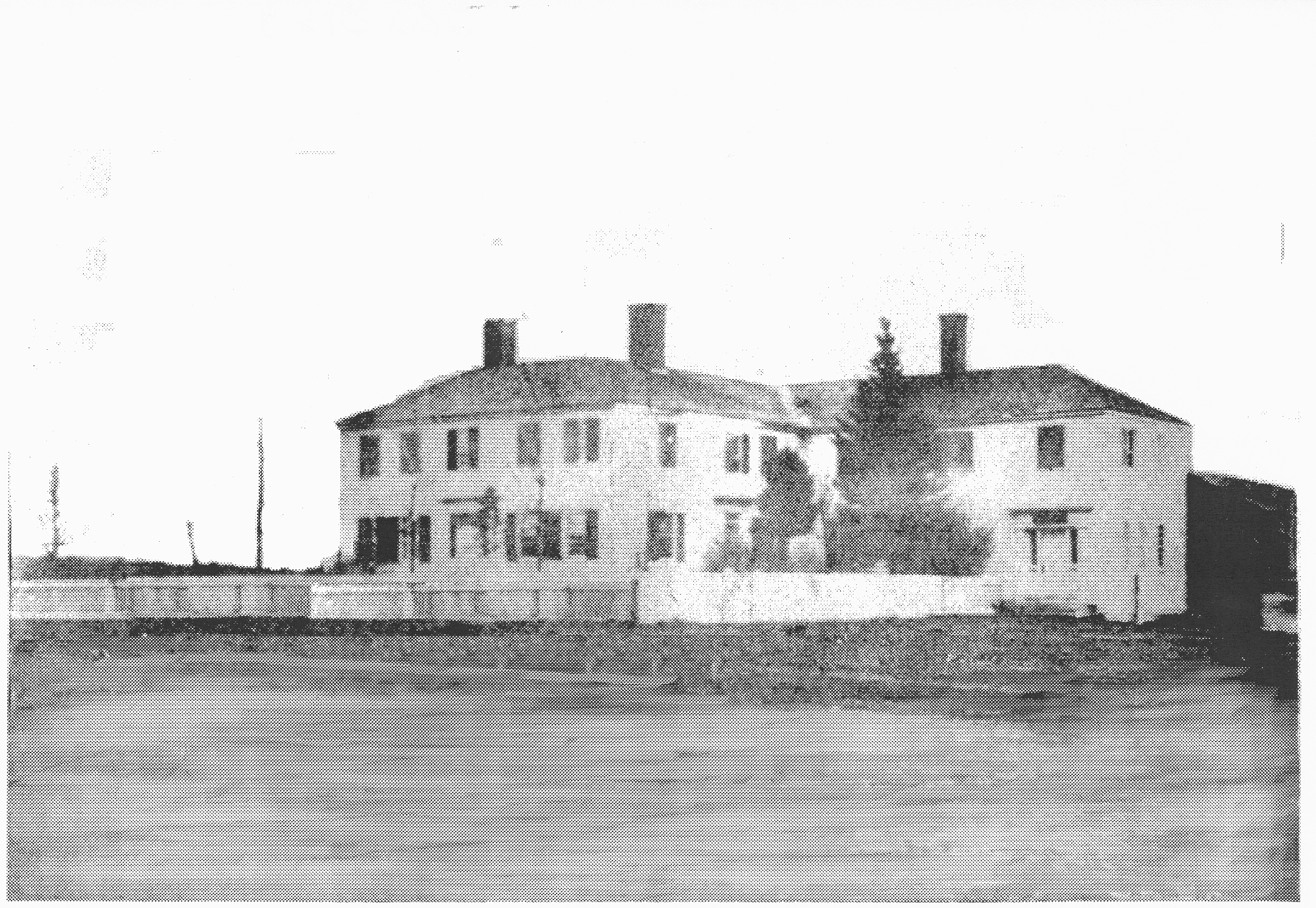
The Conway Public Library's Henney History Room has a photograph that very nearly matches the painting. 


You can find it in our online catalog here. Note the two images are from almost the same angle, with same number and location of chimneys and a the white picket fence. 

The Conway Public Library provides access to the 1950 census through its geneaology databases. Here is a screen shot about the owner and residents of the building...


... and some details from the original hand-written record (click on images to enlarge them). 


x
x


x
x


We also have a booklet written by the owner's daughter. 


The caption for the cover photo reads "The doctor with Joanna, age 2 1/2, and the family mascot, Jerry, in front of the house and office on Pleasant Street." 

The book is full of wonderful stories as told by family and friends. Now for the real kicker, we can actually take a peek back in time, and watch the daughter, now older dancing in the house. 


You can find a link to our youtube video channel here. Scroll the time bar to part 1 at 13 min and 45 seconds. 

So waltz on down to the Conway Public Library's Henney History Room so see what we can discovery about your history!

Thursday, September 29, 2022

Time to Celebrate Autumn!


These are some of the iconic images of Autumn from the Conway Public Library's Henney History Room that greet you as you enter the library. 

You are invited to learn more about this subject at our Art of the Harvest program on Wednesday, November 2, 2002 from 6:30 - 7:30 pm. FMI follow this link here

We would also be happy to present this free program to local school and community groups. 

You are also welcome to visit the Conway Public Library's Henney History Room to explore the many other items we have related to the season. For our opening hours and contact info follow this link here

This is just a small sample of a seasonal items we have in a variety of media including VHS, DVD, CD-ROM, life style periodicals, poetry and period guidebooks. 

For an interesting perspective on Halloween in Conway follow this link here to The Conway Boy video and view the clip at 8 minutes and 33 seconds (...little kids sure are comical). 

We are always looking for materials to add to our collection. We are particularly interesting in collecting items from the last 50 years to keep our archives up to date. If you have any photos of your own Autumn celebrations (Halloween, Thanksgiving, etc.) or stories you would like to share please contact us. In a hundred years people will want to know what life was like in Conway way back when!


z

Wednesday, June 8, 2022

Happy World Oceans Day!

Greetings from the Conway Public Library's Henney History Room.

Today is World Ocean Day! Time to shellebrate!

In honor of today's event and our upcoming "Oceans of Possibilities" theme for our summer library reading program ... I offer you one of Keith Henney's most unusual books...


...with the intriguing title, "A Hunt for Sea-Going Elephants, 1899-1901." 

You can find a link to it in our online catalog here. For more on Keith Henney see our previous blog here

This book is quite a departure from the many technical and scientific books he wrote on electricity and radio, or his many books on local history.
 
It serves as a good introduction to today's theme.  The purpose of World Ocean Day is to inform the public of the impact of human actions on the ocean, develop a worldwide movement of citizens for the ocean, and mobilize and unite the world's population on a project for the sustainable management of the world's oceans. 

The book's title refers to the hunt for elephant seals for their oil to light lamps before electrical lights were available. The book is based on the logs and records of a year long voyage of a the R. S. Graham, a schooner, sailing vessel to the far South Seas. 

According to various internet sources, elephant seals were hunted for their high-quality oil, 200 pounds of which could be obtained from a large, adult male. The oil was used for lamps, lubricating machinery, and making paint, soap, and candles. It was so popular that by the end of the 1880s, after 40 years of hunting, elephant seals were thought to be extinct.

Elephant seals are large, oceangoing earless seals in the genus Mirounga. The two species, the northern elephant seal (M. angustirostris) and the southern elephant seal (M. leonina), were both hunted to the brink of extinction for oil by the end of the 19th century, but their numbers have since recovered. They are the largest extant carnivorans, weighing up to 4,000 kilograms (8,800 lb).

Elephant seals are marine mammals classified under the order Pinnipedia, which, in Latin, means feather- or fin-footed.

Throughout the book, Henney's interest in period language and arcane and obsolete terminology such as gaboon, earing, gripes, yard, opodeldoc is on display.

FMI on our summer reading program for 2022 "Oceans of Possibilities" and our kick-off event on June 16, see our website here. Throughout the summer we will host other events focusing on turtles, seashells, lobsters, microplastics, and stories, songs and dance. 

The Mount Washington Valley has some other "ocean" related claims to fame. For info about local polar explorers see some of our previous blogs here and here

We have a large collection of books on these expeditions and details about the ocean voyages they undertook. 

While New Hampshire only has 13 miles of ocean coastline, our ocean related property played an important role in late 19th century art. Here are a selection of artworks to enjoy. 


In previous blogs we have explored the farm related works of Winslow Homer. This summer New York's Metropolitan Museum of Art is hosting an exhibit of Homer's artworks related to the ocean. 


FMI on the exhibit see this link here

Homer's work spanned the frigid, tumbling waters of the North Atlantic to the tropical waters of Florida and the Caribbean. 

The centerpiece of the exhibition is Homer’s iconic The Gulf Stream, a painting that reveals his lifelong engagement with charged subjects of race, geopolitics, and the environment. Featuring 88 oils and watercolors, Crosscurrents represents the largest critical overview of Homer’s art and life in more than a quarter of a century. Here are some more of his works to enjoy. 


In addition to art, songs, stories and dance, science is another way to understand the oceans. 

Recently the ocean mapping at UNH was featured on NH Chronicle. You can learn more about that program and view the segment here


Back in the sub-tropics my new son-in-law has been mapping the warmer waters around Florida in part with an un-manned device. 


These and other scientific processes will help us meet the goals outlined above for World Oceans Day. 

The Conway Public Library's Henney History Room offers free outreach programs on all of the topics above to local schools and community groups. Feel free to contact us.