Friday, July 25, 2025

History on the Move


Historic sketch of a building being moved. 
Note they used at least six yoke (pairs) of oxen. (click on images to enlarge them)
Charles-Alexandre Lesueur (1778-1846). Le Havre (France), Muséum d’histoire naturelle.


Starting at 9 am on Tuesday, July 29, 2025 (weather permitting) you will be able to see a similar scene to that above when the Jackson Historical Society moves its museum building (the original Jackson Town Hall) about 150 feet to a new location, albeit with modern equipment instead of oxen. 

The building is all jacked up and ready to roll!


Be sure to put this on your calendar! 
Bring a lawn chair and watch the fun from a safe distance across the street

The Conway Public Library's Henney History Room Curator, Bob Cottrell, (and part-time curator at the Jackson Historical Society) will present the library's newest hands-on outreach program about "simple machines" to help explain and interpret the mechanics of the moving operation and to compare tools and techniques of the past and the present. 

This newest outreach program explores some of civilization's most ancient and enduring technologies. 

There are six "simple machines" that date back to ancient Egypt, Greece and Rome. They are the lever, incline plane, screw, wedge, pulley, and wheel and axle. We will look at how these tools work and the mathematical principles involved in calculating the mechanical advantage they provide.

The Conway Public Library offers a number of free outreach programs on historical topics to local schools and community groups. 

In addition, stone mason Michael Callis, who has presented several programs at the Conway Public Library on the secret meaning of symbols used during the fight for American independence, will explain stone working tools and techniques used to split and shape the stone that served as the original building's foundation. Some of this stone will be incorporated into the building at its new location.

These interpretive stations are on a drop by basis, with no real start or finish to the interpretation. You can spend as little or as much time as you want. 

While it might seem astounding to us today, it was actually quite common in the past to move buildings.

It made a lot of sense back then and still does today. This adaptive reuse is part of the Yankee ethics of “Use it up, wear it out, make it do, or do without.”

Our motto is "raise the building, don’t raze it." 

The Jackson Town House was built in  1879. When the town moved their offices to another building, it was adapted by the Jackson Historical for their museum. 

The move follows a successful fundraising campaign, however due to unforeseen additional costs, in large part to massive stones found under the building that were in the way, they need additional funds to complete the project. 


The building needed to be moved away from the erosion of the nearby river bank. For more info on other reasons to move the building and the fundraising campaign see the following links:  

JHS website here

NH Preservation Alliance "Seven to Save" list here and scroll down to the Jackson Town Hall. 

From there you can watch a great video or go directly to this link here

Many local town histories relate tales of moving buildings. In his book, “Big House, Little House, Back House, Barn: The Connected Farm Buildings of New England,” 1984, Thomas C. Hubka provides an excellent historical and technical context to the practice of moving buildings in New England. 

According to Hubka, the tradition of moving buildings was “a particularly American, and specifically New England, building phenomenon."

In her 1832 book “Domestic Manners of the Americans,” Frances Trollope relates “One of the sights to stare at in America is that of houses moving from place to place. We were often amused by watching this exhibition of mechanical skill in the streets. They make no difficulty of moving dwellings from one part of the town to another. Those I saw travelling were all of them frame-houses, that is, built wholly of wood, except the chimneys; but it is said that brick buildings are sometimes treated in the same manner. The largest dwelling that I saw in motion was one containing two stories of four rooms each; forty oxen were yoked to it.”

New England farmers were well prepared for the task. They had experience logging and had perfected the art and mystery of moving logs on skids and wagons with the aid of oxen and horses. They could easily adapt their wood-hauling technology to the movement of buildings. They had the tools and they understood the math and physics of the six simple machines known by the ancient Greeks and Romans.

Most buildings of the time were built with a structural system that allowed for the unusual stresses of being moved. There was no plumbing or electrical systems to work around. While they were transitioning to a more modern, lighter weight balloon framing system, at the end of the 19th century, they still maintained many elements of the earlier heavier timber framing tradition with its mortise and tenon joints, heavy sills, posts, rafters and purlins that could stand up to being moved.


Here are the six simple machines


Thanks to our friends at the Freedom Historical Society (FHS) we will have historical examples of tools using these simple machines. Borrowing items from the FHS is part of long-term, ongoing partnership between the Conway Public Library's Henney History Room and the FHS (where Bob serves as a consulting curator),  for outreach including regular sessions at the Conway Adult Day Center and local schools and community groups. 

For more information on the FHS follow this link here


Let's start with the screw. 

In the past screw jacks were used to lift the buildings vertically.  


Today the screw jack has been largely replaces by hydraulic jacks. 

I am indebted to Jackie Conners, JHS webmaster Extraordinaire, for many of these photos.


For more information on Gary Sylvester's company follow this link here. To look at the progress done with the building to date follow this link here

While the principles involved in hydraulic jacks also date to ancient times, and the portable hydraulic jack was first patented in 1851, Sylvester's moving company still employs the screw in a number of different applications. 


Screw and lever combination used too secure building elements together


Bolt screw with large nut, and C clamp


A screw can be seen in the anchor shackles at the front of the wheel and axle sets above. Below is a detail of that image. 


The screw principle can be seen in the large turnbuckles used in the past to reinforce the walls from splaying. 
 
The wooden framing was added by Gary Sylvester to stabilize the building during the move. 
 

Pulley
Now to the pulley. 


In the past, pulleys were used to pull the buildings horizontally.  

Our interpretive station will provide an opportunity to study an historic pulley system up close and examine its working parts. 

Today mechanical winches have largely replaced pulleys, 

The whole building will be rolled to its new location using the wheel and axle. 

Wheel and axle


Inclined Plane


Then the building will be rolled down an inclined plane to its new location... 


... where a new concrete foundation has been poured
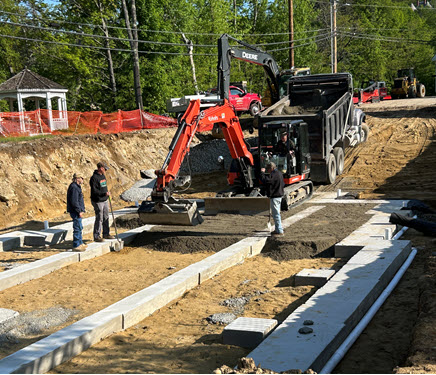


Thanks to our friends at the Cathedral Ledge Distillery, we will have a barrel for folks to experiment with to help understand the mechanical advantage provided by the inclined plane. 


This is actually a combination of two simple machines in operation as the barrel itself functions as a wheel and axle. 

For more info on the Cathedral Ledge Distillery follow this link here


Lever 


The lever plays a key role in working with stone. Michael Callis will explain the lever and other stone working tools used to split and shape stone like that which served as the original building foundation and will be incorporated into the building at its new location.


These stones were removed from the old foundation have been numbered so they can be placed back in the order they were in the original foundation. 

Michael will also explain those mysterious tool marks seen on many of the stones. 

Hint: They were made with a wedge. 


Michael will also explain how stones are arranged like a puzzle to create a stone wall for the foundation. 

In this photo you can see the foundation wall of rough stone and the finished cap stones. 


Here is a useful guide to the fascinating way the stones are seen and named by the stone mason. 


We will also look at the mathematics behind the mechanical advantage that the simple machines provide. You can actually math out the physics with these formulas to calculate the effort and force involved. 


As we got into the project, we discovered significant problems with a rotting wooden sill. 


You can see from the picture above the large dimensions of the original posts and beams. 
A modern 2x4' board was not going to fix this. 

Here is the replacement sill


There is an interesting story behind this sill beam. That is not something that you can easily pick up at Home Depot. 

So with the approval of our friends at the Upper Saco Valley Land Trust (USVLT) our intrepid "hamsters" went into the Dundee Forest and cut down an appropriate tree. 

"Hamsters" is an affectionate term we use for the folks involved in another Jackson HS related project, the Ham House in the Dundee Forest (left to right: David Shed, Anne Pillion and Stephen Weeder). 


The Ham House is also on the NH Preservation Alliance "Seven to Save" list. FMI on the NH Preservation Alliance "Seven to Save" list follow this link here and scroll down to the Ham House, Jackson. 

From here you can watch a great video or go directly to this link here


In these pictures and videos, Stephen Weeder and David Shed, with the green light from USVLT, take on the Dundee Community Forest, wielding an antique hand ax and saw to expertly fell a tree! The two trees were carefully selected, away from sensitive areas. 


This was not a commercial harvest but a collaboration between JHS and USVLT. The timber, now masterfully sawed, has been installed on the Town Hall, marking a historic moment in the making, and a great example of historical continuity in the building trades. 

The felled tree was sawn into a beam. 


For more information on the Dundee forest follow this link here.  


For more information on the USVLT forest follow this link here.  

A good place to study timber framing is at the Cathedral Ledge Distillery check out their building at this link here.


Now to the interior finish work. The original windows are being removed to be restored with historically accurate techniques by Jason Earle of Effingham's Rooster Productions. Jason has worked on numerous restoration projects with the NH Preservation Alliance. 

While the moving operation has been carried out by Gary Sylvester's company, it has in fact, been carefully supervised by the students at the Jackson Grammar School, located across the street from the building. 


Heigh Ho, Heigh Ho, its off to work we go


So don your hard hat, and be part of the fun. We hope to see you at the event. It promises to be a very moving experience!

Friday, June 20, 2025

Summer 2025 The Shape of Time


The summer solstice will occur tonight at 10:42 pm Eastern Time for the Northern Hemisphere. It will be the longest day and shortest night of the year. The word solstice is derived from the Latin sol ('sun') and sistere ('to stand still') as the sun appears to stop as it reaches its highest spot in the sky for the year and then slowly returns to its lowest spot for the winter solstice.  
 
This annual event has been celebrated by many cultures for thousands of years.

Many monuments have been built around the world to mark the event such as Stonehenge in England, Chichen Itza in Mexico, Machu Picchu in Peru, Chaco Canyon in New Mexico, Serpent Mound in Ohio, Newgrange in Ireland, and the Pyramids in Egypt. The oldest known may be Gobekli Tepe in Turkey. 

While you can not actually see time, these structures were an attempt to document and calculate the passing of time in a physical form resulting in unique and distinctive structures. 

Another shape of time can be found on model globes of the earth. 


The figure eight shaped analema diagrams the position of the sun in the sky as viewed from a fixed location on earth at the same time each day throughout the year. 


Due to the earth's tilt the sun appears very high in the sky during the summer and low in the sky in winter. In addition to this north-south variation, there is a slight east-west variation as well. The result of these changes is that the shadow of the Sun's location at noon makes an elongated figure eight shape.

You can see the earth's tilt on the model globe. 


It is that tilt that creates the seasons. 


The orrery, as seen in this painting by Joseph Wright of Derby, was created to help explain the relationship of the sun and planets in the solar system. 


Historians have created various designs to link the seasonal changes with traditional patterns of farm life (click on images to enlarge them).


Robert St. George conceived of time as a circle or cycle. 


Thomas Hubka envisioned time in a linear form. 

The Conway Public Library's Henney History Room offers a number of free public outreach programs related to the shapes of time to local schools and community groups. You are also welcome to drop by the history room and talk about time, any time. 
 

Saturday, May 10, 2025

Big Bird Day


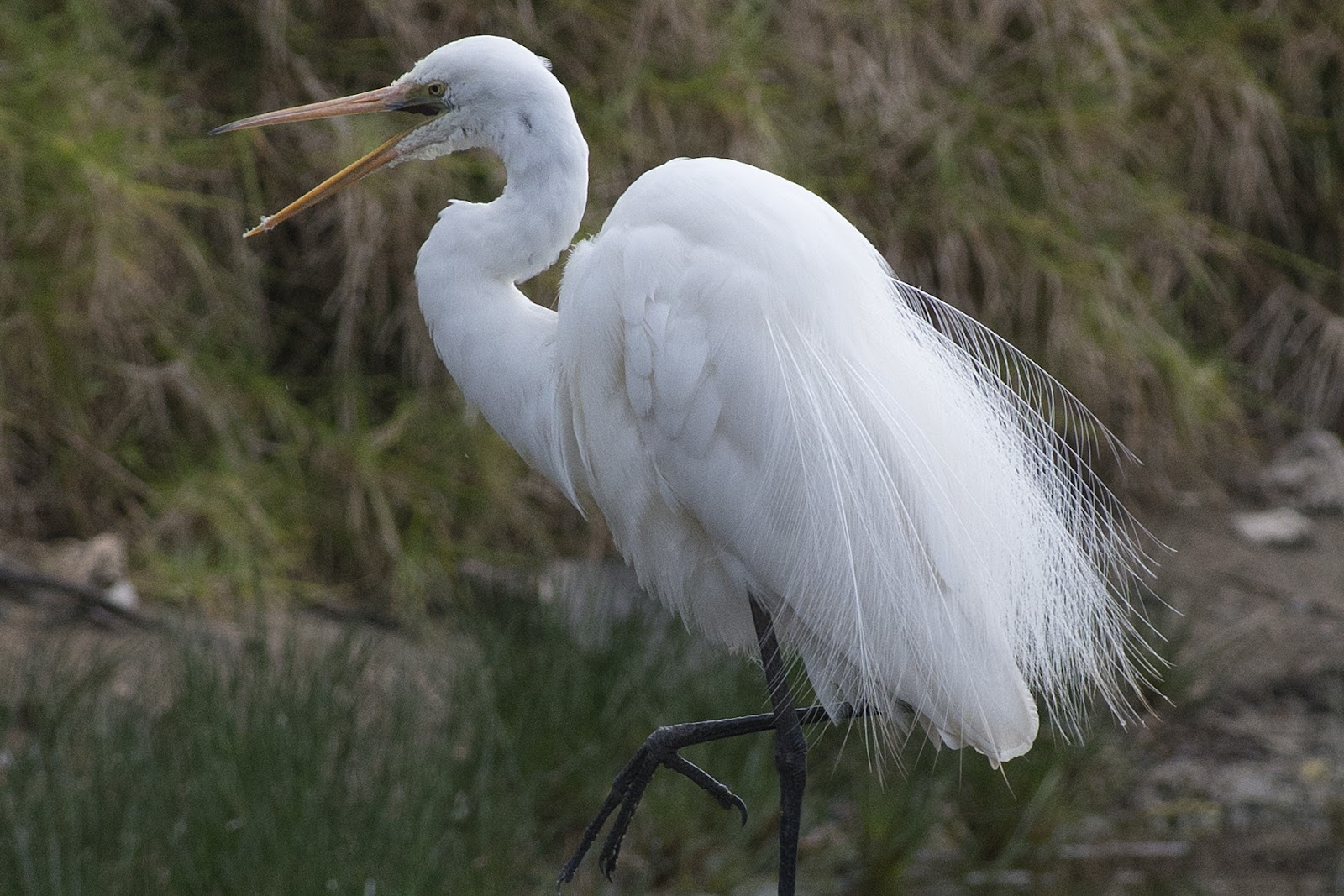
No, I am not referring to the one above. 
I am referring to the bird that was threatened with extinction below. 


Today is world migratory day. FMI follow this link here

I want to use this opportunity to promote an upcoming program to be presented by the Pontine Theatre at the Conway Public Library Thursday, May 22, 2025 from 6-7 pm. 

They will use a "toy theatre" like the one above in their unique approach to storytelling. You can find more info on the program here

They will  present original adaptations of two stories by two New England authors. In a previous blog here, we looked at Robert Frost’s The Star Splitter

This blog focuses on Sarah Orne Jewett’s A White Heron. Published in 1886, it is often seen as a coming of age story about a young city girl, Sylvia, who comes to live with her grandmother in the country. She meets a young ornithologist who is hunting a rare bird he recently spotted in the area. Sylvia wants to please the young man by revealing the heron’s location, yet doesn’t want him to take its life. In the end, she embraces her passion for country life and the natural world around her.

I want to focus more on the bird than the girl for now. First, there is some question about exactly which white heron they are talking about. There are actually a number of bird species referred to as a white heron including Great Egrets and Snowy Egrets. In either case, they are "snow birds" that migrate between Florida and Maine. 

Why is the young man hunting for birds? In the context of the story, he refers to his collection of stuffed birds. 

John James Audubon was also known for shooting and stuffing birds to use as models for his artwork. 

Let's follow the Audubon connection is a different direction. The Audubon Society was founded by two Boston socialites in response to the late 19th century fashion craze for hats decorated with bird feathers.


White Herons were particularly valuable for their plumage.


One of the Boston ladies who helped found Audubon and save/ protect these birds has a local connection to the greater Mount Washington Valley in NH.  


Harriet Lawrence Hemenway, seen in this 1890 portrait by John Singer Sargent, was one of the Boston ladies who helped found the Audubon Society. Hats off to her!
 
No I did not spell it wrong. For more on that "Hemingway," see our previous blog about Chocorua's Hemingway here.  
 
There are two children's books about Harriet Hemenway and her struggle to protect the birds. While not in the collection of the Conway Public Library, we can get them for you through interlibrary loan (ILL).


Recently the library hosted a program by David Govatski about big trees. He pointed out that many big trees can be found in the Big Pines area of the Hemenway State Forest in Tamworth which Harriet and and her husband helped establish. FMI see this link here and here


Saturday, May 3, 2025

The Star Splitter


Today is International Astronomy Day. I want to use this opportunity to promote an upcoming program at the Conway Public Library. 

On Thursday, May 22, 2025 from 6-7 pm the Pontine Theatre will present "Sojourner Stories" which uses their unique storytelling techniques to display original adaptations of two stories by New England authors Robert Frost and Sarah Orne Jewett. 

Today's blog focuses on Robert Frost’s poem "The Star Splitter." 

Published in 1923, the story explores the conflict between societal expectations and individual passions. A farmer’s reckless pursuit of a telescope leads to the loss of his farm and home. This loss initially evokes ridicule from the townspeople. 

However, their subsequent contemplation reveals the importance of forgiveness and understanding. Frost uses the image of a telescope, "a star-splitter," as a symbol of the farmer’s "life long curiosity about our place among the infinities.”

We will cover the second story, Sarah Orne Jewett’s A White Heron, in a future blog.

For more info on the program follow this link here.

So now to Robert Frost’s poem "The Star Splitter." To see the whole poem follow this link here


Robert Frost's poem starts with, 

"You know Orion always comes up sideways.
Throwing a leg up over our fence of mountains,
And rising on his hands, he looks in on me"

The narrator feels as if nature in the form of the constellation Orion is watching him and has caught him red handed. The poem continues,

"Busy outdoors by lantern-light with something
I should have done by daylight,"

While not clear at this point what he is doing wrong, we learn later in the poem that he is splitting wood by lantern light and too late in the year after the "ground is frozen," when the constellation Orion is most obvious in the early night sky. 

Even the wind criticizes him, 
"...a gust flings a handful
Of waste leaves at my smoky lantern chimney
To make fun of my way of doing things,"

In the poem, you can see contrasting meanings of the term "split."

First we have the image of the narrator splitting wood, a very practical, earthly seasonal thing to do, critical to surviving during the time period through the winter and to basic daily life as most meals then were cooked with a woodstove. 

We learn that the title of the poem refers to a telescope christened the Star-Splitter. The narrator explains the telescope was named that ...

"Because it didn't do a thing but split
A star in two or three the way you split
A globule of quicksilver in your hand
With one stroke of your finger in the middle.
It's a star-splitter if there ever was one,
And ought to do some good if splitting stars
'Sa thing to be compared with splitting wood."

Quicksilver is also known as mercury liquid at room temperature

So this use of "split" is cosmic, unearthly, with no real practical application to survival. 

The contrast between the earthly and the cosmic universe is also seen in how he acquired his telescope. 


This pr photo from the Pontine Theatre shows how they use their "toy theatre" to illustrate the part of the poem in which we discover that after failing at farming, 

"He burned his house down for the fire insurance
And spent the proceeds on a telescope
To satisfy a lifelong curiosity
About our place among the infinities."

In a later stanza it is revealed that, 

"Trying to sell his farm and then not selling,
He burned his house down for the fire insurance
And bought the telescope with what it came to."

But still he had to work to live so, 

"Out of a house and so out of a farm
At one stroke (of a match), Brad had to turn
To earn a living on the Concord railroad,"

"As under-ticket-agent at a station
Where his job, when he wasn't selling tickets,
Was setting out up track and down, not plants
As on a farm, but planets, evening stars
That varied in their hue from red to green."

Later in the poem, the narrator declares. 

"A telescope. Someone in every town seems to me owes it to the town to keep one."


Thanks in large part to this gentleman from South Tamworth NH, we do have one for you to check out from the Conway Public Library. You can find it listed in our online catalog here. We also have star charts and numerous books on astronomy to share.

The poem concludes with these thoughts, 

"We've looked and looked, but after all where are we?
Do we know any better where we are,
And how it stands between the night tonight
And a man with a smoky lantern chimney?
How different from the way it ever stood?

We hope to see you at the library soon and that you attend the Pontine Theatre program. 

Wednesday, April 30, 2025

Big Trees and Bad Little Bugs


If you see this type of "blonding" effect on your tree, you can kiss your ash goodbye. 


This is what is going on beneath the bark.

Yesterday I attended an interesting program on the Emerald Ash Borer and increasing damage to other trees presented by Wendy Scribner at the Freedom NH public library. 

Tonight there was a program on successful big trees at the Conway Public Library presented by David Govatski. More on that later in this blog and in a future blog   

Wendy covered how to id ash trees and the evidence of damage done by the Emerald Ash Borer. She also covered ways to manage the problem. In some cases this is being done with introducing good bugs to kill the bad bugs. 

Last year the Conway Public Library's Henney History Room was involved in exhibits and outreach programs in which we covered the role of ash in making baskets, dog sleds and Windsor chairs. We offer these programs for free to local schools and community groups. 

You can see a previous blog on one of these projects here

Wendy also covered invasive bug related issues with Beech, Hemlock and other trees at risk.  

We all lamented on the loss of our Elm and Chestnut trees, often seen in White Mountain Art. 
For example, see our previous blog here

The Conway Public Library's Henney History Room has an excellent collection of books and information on the subject. 

Tonight David Govatski addressed how to recognize the unique physical characteristics, important ecological attributes, and wildlife that favor old growth forests, and their importance as carbon reserves to help cool our planet. He reviewed several of the finest old-growth forests across our state, where ancient trees are a source of awe and inspiration. Recent research has shown we need both old-growth forest reserves and sustainably managed forests to provide for the needs of society and nature.

For more information contact Bob at the Conway Public Library's Henney History Room.

Thursday, March 20, 2025

Spring ahead


Spring began today (March 20, 2025) at 5:01 am EDT in the Northern Hemisphere, marking the spring equinox, when day and night are nearly equal in length. 

The illuminated manuscript featuring March from between 1412 - 1440 depicts some of the French farming practices from that time. 

In the foreground you can see plowing the fields with oxen. Beyond that they are pruning the vineyards and behind that to the left they are caring for sheep. 

At the top are the constellations, zodiac and image of Apollo with the sun. Phebus is another name for the sun god and he is featured in a poem by Thomas Randall of Eaton, NH here about the birth of spring and the death of winter. 

The poet Donald Hall captured a less optimistic scenario in his poem about maple syrup here

While astronomical spring began today, meteorological spring began on March 1. 

March is a time of variable weather and authors and poets had words to say about that too. 

One of my favorite quotes about spring weather comes from Great Expectations by Charles Dickens.

“It was one of those March days when the sun shines hot and the wind blows cold: when it is summer in the light, and winter in the shade.”

We have certainly experienced that over the past few weeks. 

Robert Frost echoes a similar sentiment in his poem about two tramps in mud time.

The sun was warm but the wind was chill.
You know how it is with an April day
When the sun is out and the wind is still,
You’re one month on in the middle of May.
But if you so much as dare to speak,
A cloud comes over the sunlit arch,
A wind comes off a frozen peak,
And you’re two months back in the middle of March.


You can read the whole poem here

To learn more about historic art, poetry, farming and foodway practices from this time of year visit us at the Conway Public Library's Henney History Room.