Sunday, June 28, 2020

Cathedral Ledge

This poster of Cathedral Ledge is on display in the Conway Public Library's Henney History Hall. It is the first object you will see at the bottom of the stairs on the left. 


Here is another view (click on images to enlarge them).


To learn more about the site see our entry on theclio website at this link. You can access this on your smart phone and it can lead you to the site. You can also check out a related video here (part of our Reel History series through Valley Vision.

Back to the poster. The artist's signature and date can be seen at the bottom right corner of the side view (P. Immel 1993).


Peggy now lives and works out west. You can read more about her and her work on her website here. She graciously gave us permission to post her work on this blog. You can purchase a copy of the print at as well as other books, maps and climbing gear at the International Mountain Equipment (IME) website or their store in North Conway.

The print also credits the publishers Lewis & Yardley.


According to Rick Wilcox at IME, these guys were early IME folks. Note that a portion of the proceeds goes to the Access Fund. You can read more about their work at their website here. You can read about some of their work on Cathedral Ledge at this link.

The panel to the right of Peggy's delicate and detailed line and wash view lists the rock climbing trails that are noted on the print (click on image to enlarge it).


Note the interesting names that describe these vertical trails. Below the main image is a view of the ledge as if seen from the top (aerial view) that is lined up to you can compare the two viewpoints and help map out the access to the trails. 


Cathedral Ledge is named for a feature that has an interesting history. It is noted on this print as #38. Here is a detail. 


While it was featured in many 19th century guidebooks and photographs, unlike some other features of this cliff that can be seen in the print such as the prow and the talus slope, there are no 19th century paintings of the Cathedral that I know of. For some White Mountain paintings showing the ledges see my previous blogs here, here and here and this White Mountain Art and Artists gallery here and here.

Here is a written description of the Cathedral and the Devil's Den from a tourist guidebook published in 1876. For a story with local interest on some of these guidebooks see our previous blog here.

Many of the photographic images of the Cathedral are from basically the same viewpoint including a stereo view published by Albert Bierstadt and his brothers from 1875.


There is a copy of this book at the New Hampshire Historical Society. It actually has the stereo viewer built into the cover of the book.


Here is a single image of the Cathedral from the Bierstadt book.


Here is my attempt to recreate the Bierstadt vantage point.


According to tradition, folks brought a foot powered pump organ and held church services up here.

The Cathedral is just an easy to moderate 5 minute walk on the yellow blazed trail from this sign. When you reach the wall of the ledge at the top of the sloping trail, the Cathedral will be just a few steps to your left.


The sign is on Cathedral Ledge Road 5/10 of a mile from the turn off on West Side Road. See a Google map here.

There are a number of trails linked together that you can explore if you are not a rock climber.


Enjoy!


Wednesday, March 4, 2020

Frost Heaves


New Hampshire's 5th season is here! The period between late Winter to early Spring can be bumpy in New England and traditionally, while muddy, we take it on with a dry sense of humor.

The Norman Rockwell painting above is one of his four freedoms series. Freedom as they say, is not free, nor is it always a smooth ride. However it can be funny.

I understand there is a bit of politicking going on this time of year? 

This past Monday night was the Conway school deliberative meeting. According to today's Conway Daily Sun, "It was the shortest meeting on record since Conway switched to the SB 2 form of school meetings in 2001, adjourning after just 40 minutes, to easily top last year's 57-minute meeting. Another record set was the lowest attendance in the SB 2 era, with just 49 voters seated in Loynd Auditorium at Kennett High School (not including the 15 people in the reserved section for school personnel)."   


Tonight Conway holds its deliberative town meeting. Last night, the Conway Public Library hosted Rebecca Rule's program, "Moved and Seconded: Town Meeting in New Hampshire" with support from New Hampshire Humanities. If you missed the program check their schedule here and if you are interested in booking a program through them see the link here.

But don't expect the Norman Rockwell version of town meeting as seen in the painting above tonight. For more on this famous painting see this link.

We found out last night that Rebecca has a slightly different take on town meeting. Her program is based on her book.


In it Rule regales her audience with stories of the rituals, traditions, and history of town meeting, including the perennial characters, the literature, the humor, and the wisdom of this uniquely New England institution.

Tis the season ... This wry wit can be seen in the New England character. I remember years ago when I greeted someone with a typical comment on how nice a day it was one late winter thaw day like yesterday in the sixties, and the reply was "yeah guess we'll have to pay for it" and sure enough the next day I learned about frost heaves.


One yankee humorist, Fred Marple, has actually taken the term Frost Heaves for his bit, see his facebook here and his website here.


For even earlier humorists see our previous blog on mud season here.

Here is some of the scientific basis to frost heaves...


... but that is not as fun as complaining about the season and its cancelled dog sled races, posted roads, politicians and black flies 

However, there is a sweet side, a golden lining if you will, and it has already started, it is now sugar season. To get you in the mood for that, the Conway Public Library's Henney History Room offers a free outreach program to schools and community groups that explores the history and traditions of a typical sugaring off party. It compares how maple sugaring has been done over the years from Native American, Colonial settlers and how it has changed up through today's modern methods.

For more details on this or any other historical subject in the White Mountains, contact us at the Conway Public Library's Henney History Room.

Monday, February 24, 2020

Bob's Way or the Highway


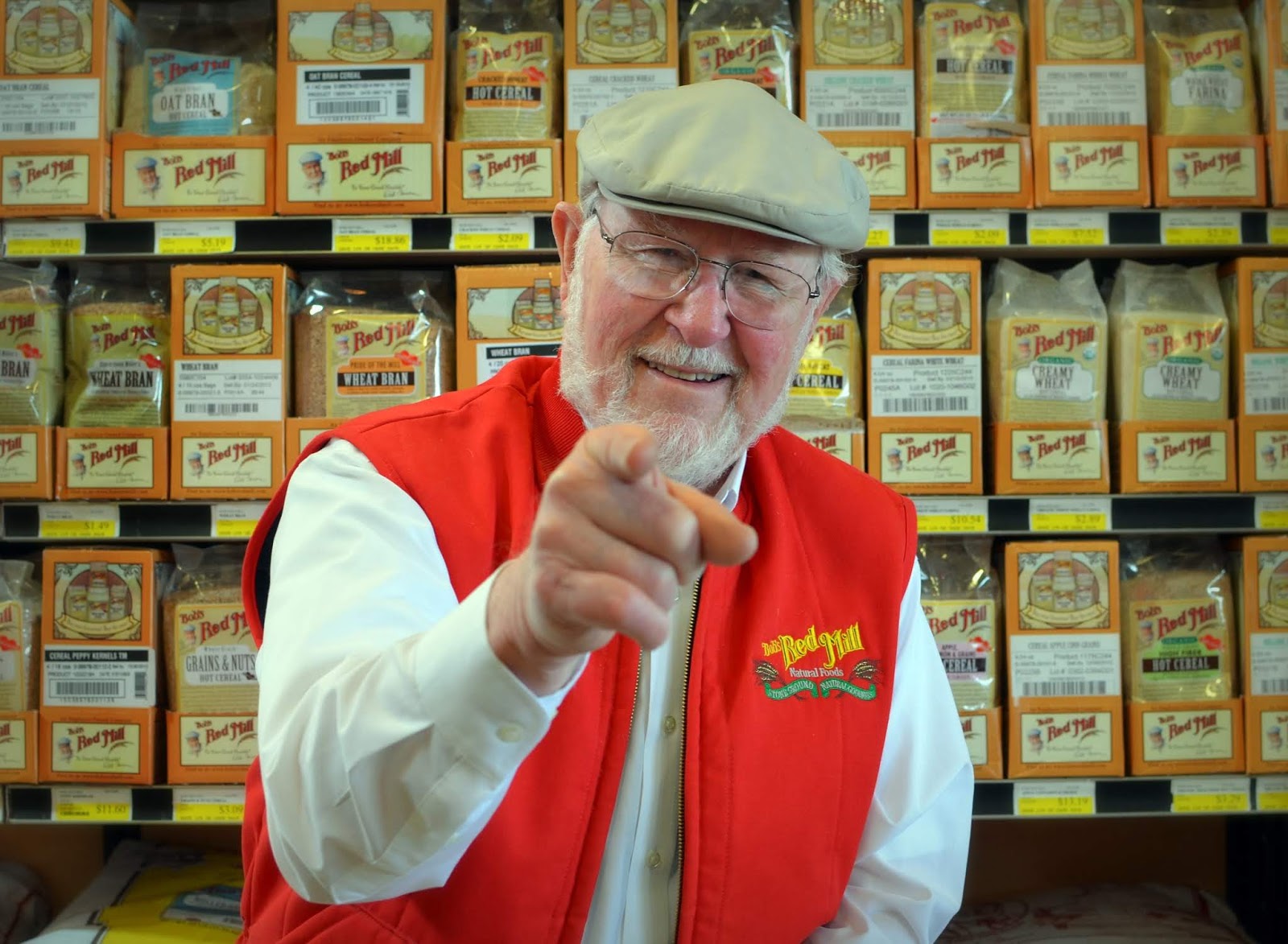
Yesterday's CBS Sunday Morning Show had a feature on Bob Moore, founder of Bob's Red Mill. You can read about it at this link. The article tells us that "Moore was in his 50s in Southern California working at gas stations and auto centers when, on a whim, he walked into a library, and picked up a book that would change the course of his life. "I still read this about three times a year," he said.


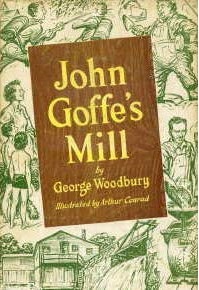
The book, "John Goffe's Mill" (published in 1948), tells the story of a man in New Hampshire who, without any prior experience, purchased and rebuilt an old grain mill. It inspired Moore to do the same."

Of course, you can find this book at the Conway Public Library as well as its follow up book, John Goffe's Legacy, also by George Woodbury.


The mill site has been graced with a state highway marker (click on image to enlarge it).


And a number of research papers available online. More details can be found in this report here and here.

I did a little internet searching and discovered that there are more recent chapters to this story. It is a story of resilience in the face of drastic change. The mill site has recently been surrounded by development and roads.


You can see the mill site surrounded by highways, malls and apartments. 


But history and tradition provide continuity in a world of change. The Whole Foods store there pays tribute to the area's history. Whole Foods stands on what use to be a beautiful (and some say haunted) hotel back in its day - the Sheraton Wayfarer Inn. They have included a beautiful tribute wall to the John Goffe’s Mills and Inn. All of the wood paneling and tables in their eating area are made out of beams from the original hotel. See this blog here


A story in the NH Business Review relates how Goeffe's mill bridge was saved from destruction here. The bridge mover is part of the Graton family that recently moved a covered bridge from Storyland to Kennett High School using oxen and pulleys.

Did you know that the Pillsbury Baking Company had its origins in Conway? 

One way to learn more about mills and manufacturing in the Mount Washington Valley is to join us next month in our Olli class. For more info see this here.


This Bob has his own bobblehead and not long ago he won the coveted Golden Spurtle award. See the news here. If only I could be such a lucky Bob!

For more details on this or any other historical subject in the White Mountains, contact us at the Conway Public Library's Henney History Room.

Sunday, February 16, 2020

Snow Dogs


Besides sharing our own collection with the public, part of our work at the Conway Public Library's Henney History Room is to help guide our patrons to other collections. This photograph of a giant snow dog sculpture can be found on the website of the Lakes Region Sled Dog Club here.

This Wednesday, February 19th, the library will host a snowman contest. We hope to see you there. For details on this event see this link.You can find historical inspiration for snow sculpture designs from winter carnivals over the years as illustrated in our collection of the Kennett High School yearbooks, The Eagle.

While the obvious focus of this photograph is the large dog, it captures at least two companies that are no longer with us. For more information on them see these links: F.W. Woolworth Company and A&P Grocery.

To better understand historical subjects, we often attend traditional events. Today was a great day for the 91st annual World Championship sled dog derby in Laconia New Hampshire. The Mount Washington Valley has had a long standing connection with this race as evidenced by another photo on that website showing Arthur Walden, the great Chinook, and Leonhard Seppala.  


For more information on these dog gone connections see some of our previous blogs:
Frozen here
Frozen 2: When Togo Came to Town.

For more details on this or any other historical subject in the White Mountains, contact us at the Conway Public Library's Henney History Room.

Monday, January 27, 2020

Snow Plows Through Town Throwing Residents into Convulsions - Read All About It!

Let's start today's adventure with a pair of chronological coincidences. Ninety-five years ago on this date (January 27, 1925), two sled dog teams started at opposite ends of a trail in Alaska to start the famous serum run. This grueling race of dogs and men against an epidemic of diphtheria is dramatically detailed in the book, The Cruelest Miles, available through the Conway Public Library.

The dog teams had to carry the serum 674 miles as airplanes, snowmobiles and ice-breaking ships were not yet up to the task.

You can read a bit about two of the event's main heroes, Leonhard Seppala and his lead dog Togo at our previous blog here.    

Two years later to the day, January 27, 1927, Seppala and his sled dogs were still making front page news in the Mount Washington Valley.


While it is impossible to read this jpeg version of the local Reporter newspaper, you might be able to see Seppala's name highlighted in blue in the third column from the left about three-quarters of the way down the page.

Here is a direct link to that page where you can read it more easily.  If you have any problems navigating the site, contact us.

However, the bigger news for the day can be found headlined at the top of the fourth column from the left about the snow plow that threw local residents into "convulsions."


Tomorrow we are doing an outreach program at the Gibson Center about how to use this online resource. We would be happy to schedule an outreach program for your school or community group on using our online resources, or on subjects such as the role of the Mount Washington Valley in polar exploration, dog sledding, or historic winter traditions such as ice harvesting. 

Below is a photo of us setting up for an outreach as one of the local elementary schools which leads us to another interesting coincidence.


The kayak model on the table is on loan from the Conway Historical Society to help illustrate the ingenious ways in which the First People in the north used nature and its resources.

In researching this model we contacted kayak expert Harvey Golden who provided the sketch below helping to identify details about our kayak model.


He suggested it was a "Norton Sound Yup'ik" kayak. Coincidentally this is the area over which Leonhard Seppala crossed not once, but twice during the 1925 serum run.

For more on kayaks see the upcoming exhibit at Bowdoin's Peary-MacMillen Museum and come for Harvey Golden's opening lecture on April 9, 2020.

For more details on this or any other historical subject in the White Mountains, contact us at the Conway Public Library's Henney History Room.

Wednesday, January 1, 2020

Frozen 2: When Togo Came to Town


Yesterday was a snow day and the kids made a very "cool" snow dog.


This sculptural snow pairs well with our collection of winter related books in the Conway Public Library's Henney History Room. That collection forms the basis of our popular outreach programs on winter traditions, polar explorers and especially dog sledding in the Mount Washington Valley.  For more on our collection see our previous blog here.

As we sled into the new year, we watched Disney's new film Togo: The Untold True Story.


While the film has been acclaimed for its accuracy, (see History vs Hollywood comparisons here) it is a bit of an exaggeration to say it is an "untold" story. It has in fact been told a number of times. It is the story of the famous 1925 serum run in Alaska.

In the movie, Willem Dafoe plays Togo's master Leonhard Seppala.  We have a copy of Elizabeth Ricker's 1930 biography of Seppala that also includes a lot of info on Togo.


Many of the incidents in the film are detailed in this book. While we do not have a copy of it in the collection (yet?) my favorite version of the Togo story is Togo's Fireside Reflections published in 1928. There are only five copies of it listed in worldcat. I went to Bowdoin to read it.

This is the story straight from the dog's mouth. Here is the real Togo telling his own story in first person narrative by the fireside. (Ok, perhaps he had a bit of help from Ricker as "ghost writer").


Note the inscriptions by Ricker and Seppala and Togo's paw print in this copy.


We were somewhat disappointed by the Disney film's ending. While the film is a true story it doesn't tell the whole story. The film uses captions as an epilogue that ends Togo's tale with the phrase "He left us on a Thursday in December." The montage of images and text makes it seem like Togo stayed in Alaska, sired a few pups and then died soon after the 1925 serum race. 

It is true that Togo passed on a Thursday in December, but is was four years later and about 3,700 miles away in Poland Spring Maine. Over the years Seppala made many visits to the Mount Washington Valley.

Ricker's family owned the Poland Springs Resort. Here is a picture of Togo and Ricker with the book in her hand. 


Is Ricker reading to Togo, or Togo reading to Ricker?

Details about Seppala's connections to the Mount Washington Valley can be found through our online collection of the Reporter Newspaper starting here.

A search for the term "Seppala" or "Togo" reveals a number of references to nearby locations such as Wonalancet, Conway and Laconia.  The newspaper articles also refer to our own local sled dog heroes Arthur Walden and Chinook. When we put together the books, newspaper articles and other sources we can glean a number of interesting stories.

One story involves a pair of cigars, a chicken, a somersault and a handspring.


The website Seppalas.org summarizes the story here

In January 1927 Seppala stayed as a guest at Walden's farm in Wonalancet with his 26 dogs. Walden didn’t think too much of Seppala’s little dogs. He referred to them as “Siberian rats.” Seppala, for his part, seemed equally unimpressed with what he later referred to as Walden’s “big, awkward mongrels."

That evening they were to speak at Fryeburg Academy. Seppala reported that "Walden preceded me and proved to be a good speaker. When it came my turn, I spoke of the trails back in Alaska and explained that although I was 50 years of age, my physical condition was excellent and stated that I attributed this largely to my abstinence from alcohol and tobacco."

"To demonstrate my agility, I turned a somersault and handspring, and while doing this, two cigars, which I had won from Walden in a bet, rolled out on the floor. The audience let out a roar and gave us a great hand. They evidently considered it all a part of the show."

How I came to have the cigars in my pocket is something of a story in itself. A short time before this, Walden had bragged that his Chinook would break out and pull a heavier load than any dog in the country. I had watched his dogs perform and answered with a challenge that my Togo, who weighed only 48 pounds in harness, could pull any load that Walden’s Chinook could. Although neither of us smoked, we bet two cigars on the result.

Seppala challenged Walden that Togo (whose weight was then a mere 48 pounds in harness) could break out and pull any load that Chinook (100 pounds in fit condition) could pull.

The sled was loaded with several sacks of cement onto which Walden hooked his dog. Chinook could not even start the load until Walden had kicked the runners loose from the snow.

I knew that Togo could do better but felt that here was an opportunity to inject a little comedy into the act. Kingiak, my Eskimo helper, hid one of Walden’s farm chickens under his parka and stepped out ahead of Togo a distance of 20 feet or so. On my command, Togo leaped to one side with his full weight straining against the collar, then another leap to the left and the sled runners were loosened. Just then Kingiak let the chicken clap his wings and Togo was upon him in a couple of jumps with a loaded sled following easily behind.

Walden was a good sport and conceded that Togo had won the cigars for me. And that, as I intimated, was how I happened to have the cigars on me when we spoke before the audience at the Fryeburg Academy.”


Like Ricker, Walden also penned a book written from a dog's first person perspective. In his 1931 book, Leading A Dog's Life, a  border collie named Shirley narrates a history of Wonalancet Farm and relates more interesting stories.


Another great book to follow the tale (or tail) of local connections is Arthur Walden's A Dog-Puncher on the Yukon from 1928. 

In 1896 Walden, age 24, left New Hampshire for the Yukon and stayed six years. Jack London left the following year and stayed for only nine months.


We have a nice early edition of Jack London's The Call of the Wild. first published in 1903.


The book was first made into a film in 1935 and the theme continues to resonate today...


A new ninth film adaption of Jack London's The Call of the Wild starring Harrison Ford and a CGI dog will premiere on Friday, February 21, 2020.

The following day you can meet some real sled dogs and learn about New Hampshire's State Dog at the 25th anniversary Chinook Winter Carnival to be held at the Tamworth History Center.

For more details on this or any other historical subject in the White Mountains, contact us at the Conway Public Library's Henney History Room. 

Monday, December 23, 2019

Our First (and most recent) Christmas Tree


We received an early Christmas gift today at the Conway Public Library's Henney History Room. An envelope arrived from Boothbay Harbor Maine with the donation of a fantastic photo album from around 1910. It is full of vacation type photos showing the Conway ledges, Lucy Farm, Saco River and so on. Also included were a couple very rare photos of an early local Christmas Tree.


Recently the Conway Historical Society restarted a new tradition in the Old Firehouse on Main Street with a new Christmas Tree decorated in an older more traditional manner.


Wooden blocks spell out Merry Christmas.


An older style Santa and traditional toys are displayed - and ornaments that tell a special story full of meaning were explained and added to the tree to be recorded and hung year after year - a blending of the old and new.


As part of the program, I related the story of the first Christmas Tree in the Mount Washington Valley "neighborhood" as originally told by Lady Blanche Murphy from the late 1800's. The tale is written in a biography of her in the History Room.

For more details on this or any other historical subject in the White Mountains, contact us at the Conway Public Library's Henney History Room.