Monday, January 30, 2017

Pin Money


In the popular CBS television show NCIS, analytical technology plays a major role in solving criminal mysteries. While we may not have Abby’s “Major” mass spectrometer to identify chemical composition of evidence, ...


My name tag does have a magnet and I am able to use it to determine ferrous (contains iron) versus non-ferrous materials.


This simple tool actually can help date early iron pins from later brass pins found in the Bemis papers used before staples to collate papers together.


Another simple tool uses the incredible magnification power of our scanner. Using the scanner as a  forensic tool we are able to magnify the head of the pins with much better imaging that a magnifying glass.


As we increase the magnification level, you can see the wide variety of pin head shapes we have been finding in the collection.


At a higher resolution you can see that the head of these early pins were actually wrapped around the straight wire shank. You can also see the rust that is another clue that these pins were made of iron.


In his famous book, “Wealth of Nations,” Adam Smith uses the example of these hand made pins to discuss the possibilities of economic improvement.

These early pins were valuable and expensive. A number of years ago, I was part of a team exploring secret drawers and hidden compartments in early American furniture. Hidden inside the walls of this desk and bookcase were sliding panels.
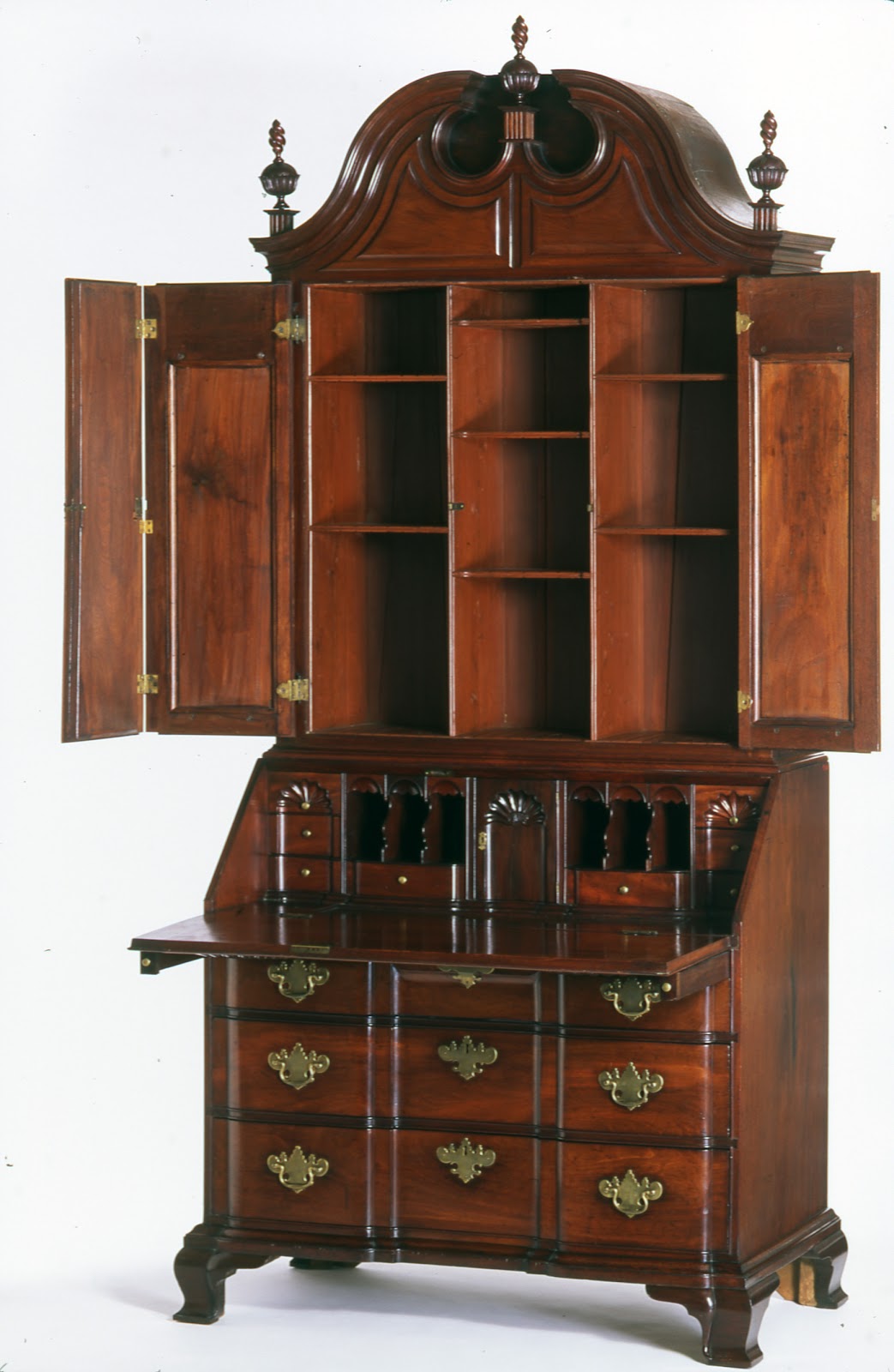


... and inside the walls we found pins and needles wrapped in paper and fabric packets.


Monday, January 9, 2017

January 1917


Our continuing series of looking at the news from one hundred years ago. The first issue of the Reporter newspaper for January 1917 featured a large ad from the Goodrich Falls Electric Company offering to wire six rooms for $35. (see ad below).
The price included a Tu-For-Wun plug, made by Benjamin Electric Mfg. Co. of Chicago, Illinois.


Before wall sockets were common and plugs were standardized, there was a bewildering number and variety of methods for plugging lights and appliances into the electrcial supply system. The Benjamin used the same screw type method for both their plugs and their bulbs so they were interchangeable. Many of these are now collector’s items and now sold in specialty antique shops


While the office for the Goodrich Falls Electric Company was in the Pitman Block of North Conway, the actual waterfalls where the power was generated was in Jackson, NH. For many years, the falls had served both a practical purpose as a sawmill and an aesthetic purpose as a tourist attraction with its image being captured by both painters and photographers.


Another big news feature was the Small murder trial held at the Carroll County Courthouse in Ossipee. It was the first murder case in the then new courthouse. “A telegraph office has been temporarily placed in the basement of the buildling and from it the operators are keeping the wires busy in sending out to the broad world the evidence as fast as it is produced. Even a barber shop has been placed for the convenience of all concerned.”


It is not until page six, after all the gossip and social society news that we get a summary of the war raging in Europe.  


Monday, December 12, 2016

Map Day A Smashing Success


Channeling 19th century mapmaker Franklin Leavitt, modern day cartographer and map collector, Kurt Masters welcomed a large group of map fans to the Conway Public Library’s map day, on Saturday, December 3, 2016.


 On display were a wide variety of maps, of different sizes and shapes.They were the subject of serious study …


… and friendly debate and discussion. Folks such as map expert Adam Jared Apt also brought additional maps to share.  


As a result of this program, the Conway Public Library’s Henney History Room will be working with the Freedom Historical Society to do a possible map exhibit for Summer 2017. 

If you missed our map day, or are simply interested in learning about area maps, please visit us at the Henney History Room. We have over 400 maps in our collection, so be sure to plan on staying a long time.  

For previous posts related to maps see the following links:


Monday, November 28, 2016

Ranco gets his deer November 1916


Our series of looking back at the news of one hundred years ago continues.


This ad from November 23, 1916, captures a major theme on the town’s mind, deer hunting.

Some things never change. Over the past few weeks I have seen a number of deer and hunters going off into the woods. 100 years ago there was more news on deer hunting than on the war raging in Europe since July 28, 1914.

The only mention of the war I could find was about the lack of information the community was getting, in this case due to censorship.


There was news however about cooking with electricity.  


The article reads more like an ad and another issue of the paper in November 1916 did include a large ad with a picture of the most modern, up-to-date electrical stove.


Thanksgiving and Christmas were featured in the paper. There was a “Thanksgiving Ball” at the Bijou (now the Glass Graphics building). Most music during the time was played live as “Victrolas” were a new thing.


This notice about a price increase for ice shows that you could save money if you purchased your ice “on the pond.” A few years ago, Bud Shackford talked about cutting ice in Conway.


Back to hunting. The shoes described in this ad sound like the famous L.L. Bean shoe.


So possibly wearing their Baker hunting shoes from W.R. Carter and their rifles and ammo from A.D. Davis, George Ronco and Stewart Anderson each got a deer near the Mineral Springs.


They may have preserved their deer in ice from a pond in Conway and cooked it on an electric stove or oven. 

Of course you can’t hunt there now, it’s now on the grounds of the “new” Kennett High School. The mineral springs has been preserved in large part by the relatives of George Ronco (now spelled Rancourt) and are open to the public. 

The Rancourt’s service during World War One has been memorialized on a granite sundial in Redstone along with the other boys from that village. For a map and photo see this link.

Neither war nor deer season is without danger.  


Be careful out there and wear orange during hunting season.


Thursday, November 10, 2016

Red flowers and green lights


Do you know what the red flower stands for?


This Friday many of us will get the day off from school or work. For some, it will be an opportunity to sleep in late. Others might use it for holiday shopping or to get the house ready for winter. There will be colorful sale ads for cars, appliances and furniture. Some places might offer a discount for veterans. How many of us will really stop to think about the history of this holiday and its meaning for Conway and New Hampshire?


Do you know what the green light stands for?


Do you know what the numbers 11/11/11 mean in relation to Veterans Day?

Do you know the difference between Memorial Day and Veterans Day?

Do you know how many veteran memorials there are in the area? Can you find them all? Have you seen them all?

Perhaps we should take some time this Veterans Day to learn about its meaning, its legacy and its relevance to us today.


In 1998, the Conway Daily Sun published a "Map of Memorials" related to Veterans (click on images to englarge). 


Ironically, one memorial missing from the list is on the north lawn of the Conway Public Library, only about 50 feet from my desk in the Henney History Room.


In April 2017, we want to commemorate the 100th anniversary of the United States entering WW1. We want to give the local community a reason to stop and think about the past and its implications for the future. A round-numbered anniversary helps with this, as we did with the 250th of Conway in 2015 and the 100th anniversary of the NH Primary in 2016. We plan to do it again in 2018 with the 200th anniversary of the building of the Eastman Lord House. For this project we will look at what Conway village was like at that time.

One hundred years is a good vantage point to research, evaluate, understand. It’s a Goldilocks time frame for historians, not too close, not too far away.  

We want to put the first World War into the context of what it meant for Conway and NH. Of how it impacted local folks.

To help us understand our history, the Conway Historical Society and the Conway Public Library will team up to create an exhibit and series of programs about Conway during World War One (and its local legacy). While the exhibit will open at the Salyards Center on July 4th 2017, we are asking the community now to help with our research, design, production and programs over the fall and winter.


 Please volunteer to become part of this important project!


Tuesday, November 1, 2016

Vote early and often

Who won?

Today’s Conway Daily Sun reports that AMC Theaters will show live coverage of next week's election results at a number of their theaters around the country, allowing crowds of folks to watch with surround sound, popcorn and soda. 

They go on to say that “Gathering with a crowd to watch election-night returns is by no means a new pastime.” and that in 1944, an estimated 250,000 people gathered in Times Square to wait for the election returns.  

Did you know the same thing happened here in Conway one hundred years ago? 


On Tuesday, November 7, 1916 the Bijou Theater (now the Glass Graphics building) had an evening of pictures and dancing with a direct Western Union Wire line from Boston (for a small admission charge).   

The paper also provided directions for how to vote (click on images to enlarge them). Remember women could not vote in 1916.


Reports on the election night were published on Thursday, November 9, however, as of press time, the results were not conclusive.


It was not until Thursday, November 16 that we get a report on the victory celebrations for the election of Woodrow Wilson who promised to keep us out of the war raging in Europe.


Keep watching this blog to see how long he kept that campaign promise.


Tuesday, October 25, 2016

It's a "live"


Yesterday's Google doodle celebrates the 384th birthday of Antoni van Leeuwenhoek, commonly known at the "Father of Microbiology."

On Christmas Day 1841 Samuel Bemis "Bot of Widdiefield & Co" a (French) microscope and two "live box" type slides so he too could see the little "bugs" that Leeuwenhoek saw in his drops of water. (click on image to enlarge it).

 To be honest we had a hard time figuring out the hand writing and had to search around to learn about the "live box." But the internet provided many clues to this mystery. 


There is a Widdifield microscope of the period in Harvard's Collection that may be similar to the one Bemis purchased.


Over the years Bemis purchased many scientific items from this company in Boston including a telescope, thermometers, camera obscura, protractors, etc.

As we learn more about Bemis and as we sort, scan and transcribe his papers, we are finding that he was at the center of studying the White Mountains through science, art, fishing, hiking, mapping and so on.We will continue to explore that intersection of Bemis and White Mountain art, science and technology.

As always, for specific sources, or to learn more about the Samuel Bemis papers or the collection of the Conway Public Library's Henney History Room contact us. By the way, did you know that you can borrow a telescope or a microscope from the library just as you would a book or a film?